


Dispatch
Signals from
the frontlines of reindustrialization
Featured

24 AUGUST 2026
Tim Ronan Joins IceNine As General Partner
We are proud to announce Tim Ronan has joined IceNine as General Partner. Tim Ronan builds things that matter. For two decades he has turned hard technology into tools that solve real problems for governments and enterprises, the kind where getting it wrong has consequences. This month he joins IceNine full-time as a General Partner.
Read More
All News
Tim Ronan Joins IceNine as General Partner
We are proud to announce Tim Ronan has joined IceNine as General Partner. Tim Ronan builds things that matter. For two decades he has turned hard technology into tools that solve real problems for governments and enterprises, the kind where getting it wrong has consequences. This month he joins IceNine full-time as a General Partner.
Jeff On Why SaaS Playbooks Derail Hard Tech Companies
Jeff has watched the same failure mode repeat across energy, defense, and deep tech: investors who don't understand the technology gain large ownership stakes and take companies off the rails. That pattern is what pushed him to launch IceNine, an early-stage venture firm built around first-principle technical depth and embedded government networks rather than a SaaS growth playbook.
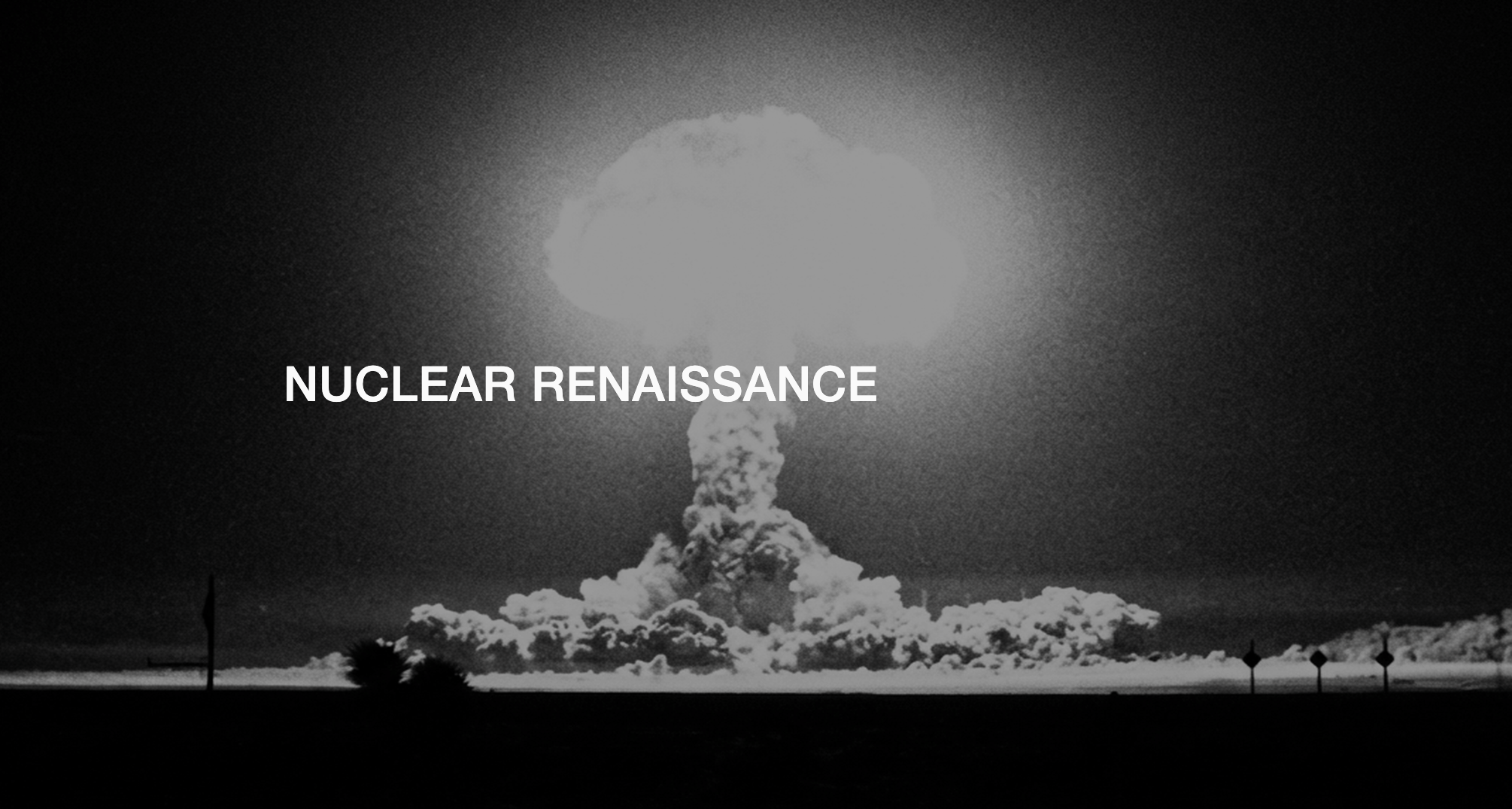
Nuclear Renaissance
A “NUCLEAR RENAISSANCE”…. In May 2020, a German utility detonated explosive charges and brought down both cooling towers at the Philippsburg nuclear power plant — a fully viable 1,402 MW station that had been switched off by law just five months prior, on New Year’s Eve 2019, in a Green-governed state. Five years later, for an encore: 600 kg of TNT, threaded through 1,800 boreholes, brought down the two towers of Gundremmingen in front of 30,000 spectators in Bavaria.

Space Power
Today, Earth installs the equivalent of all orbital solar power roughly every hour and a half. The combined solar capacity of every spacecraft, satellite, and space station in orbit today – roughly 100 MW across 10,000+ Starlink birds and everything else – is smaller than a single mid-size solar farm in West Texas. SpaceX alone accounts for the vast majority – around 90%, we’d say – of the orbital total.

The Richest Mine in America Is a Landfill
The United States is spending tens of billions to acquire the very same critical minerals that we throw away every day. Last week, the White House announced Project Vault: a stockpiling initiative that puts up $10B in EXIM financing plus $2B in private capital to stockpile dozens of critical minerals as a hedge against Chinese supply disruption.

Per Aspera: Who Controls The Air?
Most Americans have no reason to think about the electromagnetic spectrum. It is invisible, silent, and — until something goes wrong — effectively unnoticed. Yet spectrum is the medium that carries everything the country depends on: aircraft navigation, wireless broadband, satellite links, weather radar, GPS, emergency services, and the command-and-control backbone of national defense.
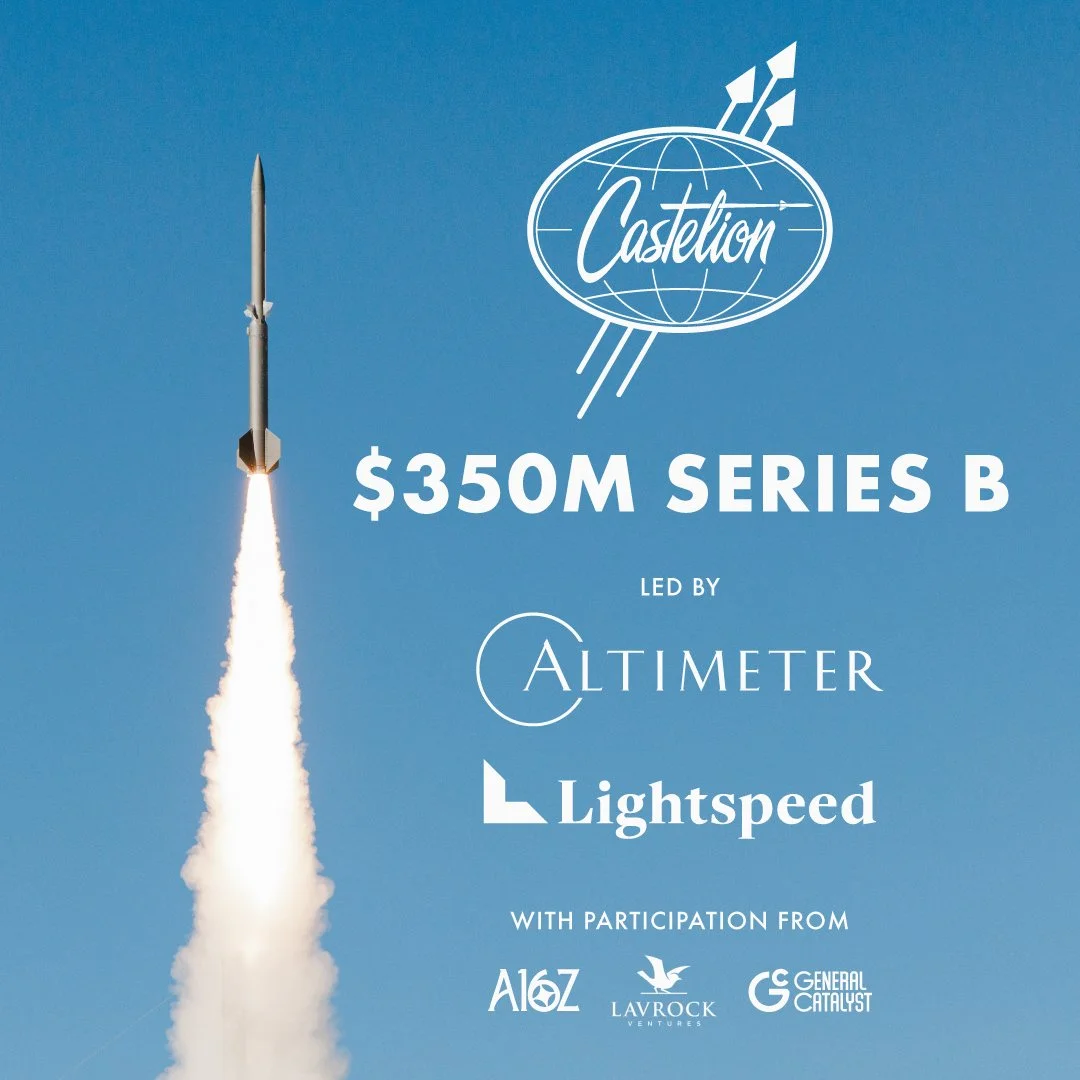
Castelion Closes $350 Million Series B to Mass Produce U.S. Hypersonic Weapons
Castelion, a cutting-edge defense technology company working to restore America's conventional deterrence capability, announced today it raised $350 million in Series B financing, positioning the company to directly advance a top Pentagon modernization priority: hypersonic munitions production at scale.
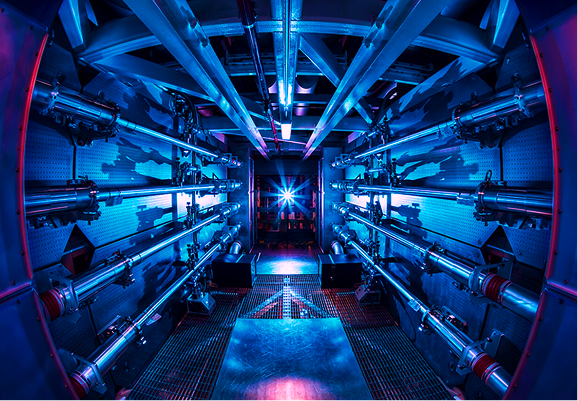
Fusion’s Year in Review, a look ahead to 2026-2030: The race to retire the “30 years away” punchline
There is an old adage in the energy business: “fusion energy has been 30 years away, for the last 60 years, and always will be.” This line is so common you can find it on Wikipedia. We have heard the joke for most of our careers, but we hear it less and less these days.

The Supercycle’s Second Order Winners
The AI supercycle isn’t just creating new winners - it’s reviving old ones. From repurposed jet engines to utility-scale power systems, the second-order beneficiaries are the operators who can deliver real infrastructure, fast.
China Ahead in Space Defense, Says True Anomaly CEO
Space security is shifting fast, and the latest conversation with True Anomaly’s CEO is a reminder of how quickly the balance of power can move. It’s a clear signal that the next strategic frontier isn’t theoretical anymore.

Building Long-Range Hypersonic Missiles: A Conversation with Bryon Hargis of Castelion
Castelion is rebuilding deterrence with real hardware and real urgency. This interview with CEO Bryon Hargis is a quick look into the future being built right now.

Jeff Crusey - Per Aspera: US & Europe neglected deep tech for decades while chasing SaaS metrics.
Watch the interview with Jeff and Viraj Acharya. Jeff’s path from biomedical research to climate, space, and now defense investing shows what happens when someone is willing to dig into the physics, challenge the narrative, and back founders who actually understand the systems they’re trying to build.

Megafunds, Deep Tech & The New VC Order
Venture capital is reorganizing around a new center of gravity: deep tech, hard physics, and investors who actually understand how things get built. Jeff Crusey and Ryan Duffy map the shift - and the growing gap between megafunds and the specialized operators the frontier economy now depends on.

Realities of Space-Based Compute
Space-based compute might sound like the ultimate cloud - endless solar power, cosmic cooling, zero-earth constraints - but the real challenges lie in the physics: heat, radiation, latency, and launch costs. Per Aspera digs deep to show that the cloud in orbit is not inevitable: it demands far more rigor than marketing lets on.

Legal
© 2025 IceNine Capital. All rights reserved.